
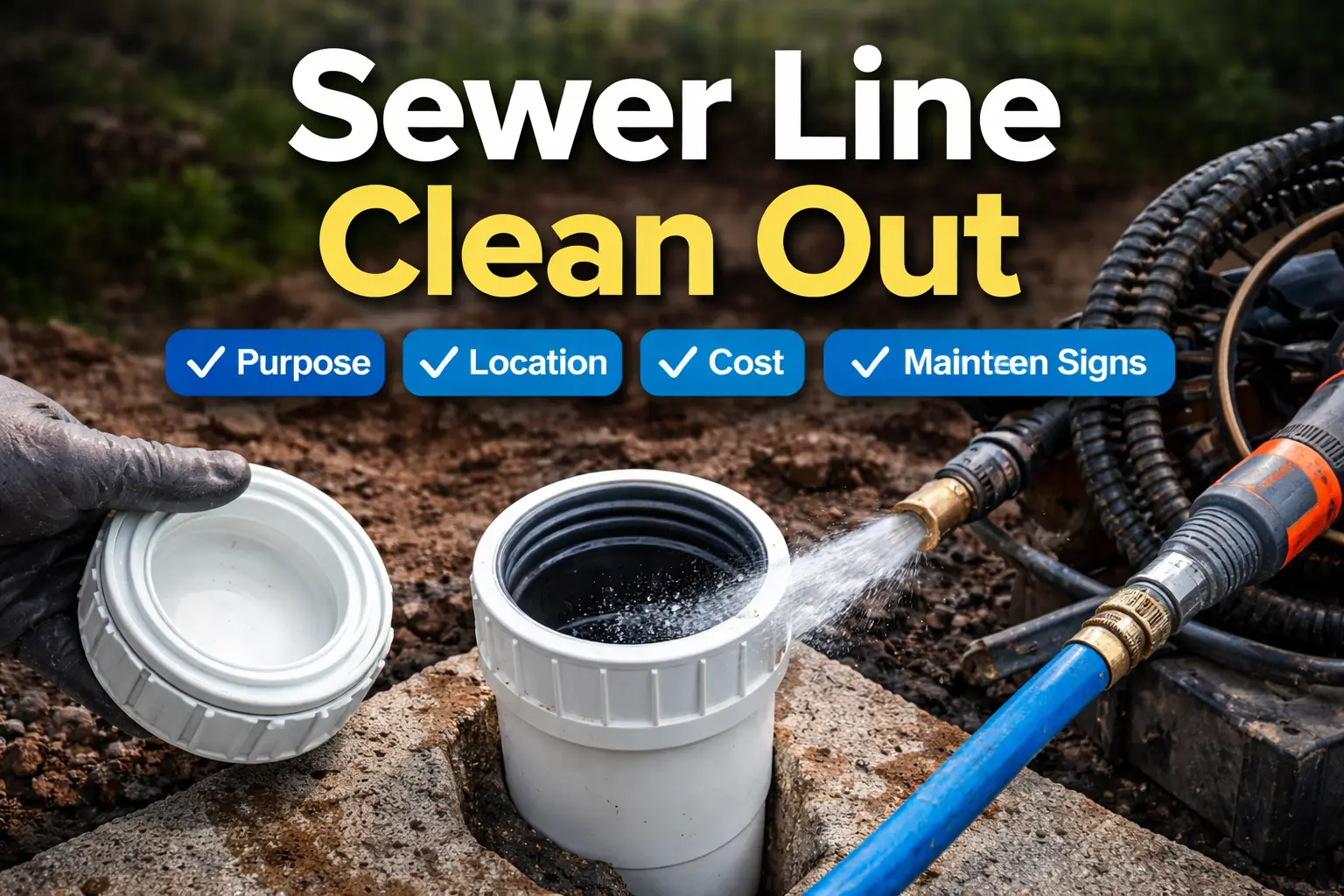
Sewer Line Clean Out: Complete Technical and Practical Reference
A sewer line clean out is a designated access point installed on a building’s sewer lateral to allow direct entry for inspection, maintenance, and blockage removal. Plumbing authorities such as the International Plumbing Code recognize sewer clean outs as mandatory access components for sanitary drainage systems. The clean out connects directly to the main sewer pipe and is sealed with a removable cap designed to withstand internal pressure and external exposure.
A sewer line clean out exists to eliminate the need for pipe excavation during routine or emergency service. The access point enables controlled entry into the sewer line without disrupting structural elements or landscaping.
Functional Purpose of a Sewer Line Clean Out
Why Sewer Systems Require Clean Outs
Sewer systems transport wastewater, solids, and organic matter. Over time, these materials accumulate along pipe walls. A sewer line clean out provides the only non-destructive access point to remove these accumulations.
According to the U.S. Environmental Protection Agency, sewer access points reduce sanitary sewer overflows by allowing early intervention. Clean outs also support compliance inspections, system diagnostics, and pipe rehabilitation.
Core Functions Performed Through a Clean Out
-
Enables mechanical drain cleaning
-
Allows camera-based sewer inspections
-
Supports hydro jetting operations
-
Provides pressure relief during blockages
-
Prevents emergency excavation
Each function contributes to system longevity and public health protection.
See More: Drinking Fountains: Infrastructure, Standards, and Modern Use
Structural Elements
A sewer line clean out consists of several integrated components:
-
Vertical riser pipe
-
Threaded adapter
-
Removable cap
-
Sealing gasket or thread compound
These components form a sealed access channel that aligns with the sewer lateral.
Common Materials Used
| Material Type | Primary Use Case | Key Properties |
|---|---|---|
| PVC | Residential systems | Corrosion resistant, lightweight |
| ABS | Interior plumbing | Impact resistant |
| Cast Iron | Older installations | High strength, long lifespan |
| Brass | Exposed clean outs | Durable, tamper resistant |
Material selection depends on local code, pipe type, and exposure conditions.
Sewer Line Clean Out Location Standards
Exterior Placement
Exterior clean outs are typically installed near the building foundation. Plumbing codes require placement within a short distance of the structure to allow full lateral access. The cap remains flush with grade or protected by a cover box.
Interior Placement
Interior clean outs are commonly found in basements, crawl spaces, or utility rooms. These installations follow strict clearance and ventilation rules to ensure safety and accessibility.
Code-Based Spacing Requirements
| Code Authority | Maximum Spacing |
|---|---|
| International Plumbing Code | 100 feet |
| Uniform Plumbing Code | 100 feet |
| Municipal Amendments | Varies |
Additional clean outs are required at direction changes greater than 45 degrees.
How Sewer Line Clean Outs Are Used in Practice
Drain Cleaning Access
Technicians remove the clean out cap to insert mechanical augers or cutting heads. The direct alignment of the clean out allows equipment to travel the full length of the sewer lateral without obstruction.
Sewer Camera Inspection
Camera systems enter through the clean out opening. These systems transmit real-time video, allowing identification of cracks, root intrusion, pipe offsets, and corrosion. Inspection results guide targeted repairs rather than full replacement.
Hydro Jetting Operations
Hydro jetting equipment connects directly to the clean out. High-pressure water streams scour pipe walls, removing grease, scale, and debris. This method restores full internal diameter without chemical use.
Installation Requirements for Sewer Line Clean Outs
Standard Installation Process
-
Cut the existing sewer pipe
-
Install a wye or combo fitting
-
Extend a vertical riser to grade
-
Secure a threaded adapter
-
Install a pressure-rated cap
All joints must meet ASTM and local plumbing standards.
Permit and Inspection Considerations
Most jurisdictions require permits for clean out installation. Inspectors verify depth, placement, and accessibility. Non-compliant installations can delay property approvals or occupancy certificates.
Maintenance and Long-Term Care
Routine Maintenance Practices
-
Inspect caps annually
-
Clear debris around exterior clean outs
-
Verify thread integrity
-
Replace damaged gaskets
-
Confirm cap tightness
Preventive maintenance ensures immediate access during emergencies.
Recommended Service Frequency
| Property Type | Inspection Interval |
|---|---|
| Single-family residential | Every 18–24 months |
| Tree-dense properties | Annually |
| Commercial kitchens | Every 6–12 months |
| Older sewer systems | Annually |
Service intervals depend on pipe age, usage load, and environmental factors.
Common Problems Solved by Sewer Line Clean Outs
Blockage Removal
Clean outs allow rapid removal of grease, wipes, roots, and sediment. Immediate access reduces wastewater backup risk.
Odor Investigation
Persistent sewer odors often originate from partial blockages or venting issues. Clean out access enables diagnostic testing without pipe removal.
Emergency Response
During backups, clean outs act as controlled relief points. This reduces pressure buildup inside interior fixtures.
Sewer Line Clean Out vs Other Plumbing Access Points
| Feature | Sewer Clean Out | Floor Drain |
|---|---|---|
| Primary Purpose | Maintenance access | Water drainage |
| Direct sewer access | Yes | No |
| Code classification | Required | Situational |
| Equipment entry | Full-size | Limited |
Clean outs are not substitutes for drains or vents. Each serves a distinct function.
Compliance, Safety, and Regulations
Safety Standards
OSHA sanitation standards apply during sewer access. Protective equipment and gas monitoring prevent exposure to hazardous gases such as methane and hydrogen sulfide.
Regulatory Oversight
-
International Plumbing Code
-
Uniform Plumbing Code
-
Local building departments
-
Municipal sewer authorities
Compliance ensures operational safety and legal approval.
Cost and Property Impact
Financial Advantages
Sewer line clean outs reduce excavation costs. Preventive access lowers emergency repair expenses. Insurance claims favor accessible systems.
Property Value Considerations
Properties with compliant sewer access pass inspections faster. Buyers assess maintenance readiness. Clean outs support transparent disclosures.
Advanced Developments in Clean Out Design
Modern clean outs include:
-
Flush-mounted covers
-
Traffic-rated caps
-
Lockable lids
-
Integrated sensor ports
These features improve durability and system monitoring in urban and commercial environments.
See More: Axurbain as an Integrated Urban Systems Methodology
FAQs:
What happens if a sewer line has no clean out?
Systems without clean outs require excavation for maintenance. This increases repair time, cost, and property disruption.
Can a sewer line clean out be added to an existing home?
Yes. Licensed plumbers can retrofit clean outs using approved fittings and permits.
Does a sewer clean out ever leak?
Leaks occur when caps crack, threads strip, or seals fail. Regular inspection prevents failure.
Is a sewer clean out the same as a vent?
No. A clean out provides physical access. A vent regulates air pressure. Both serve different code functions.
Can roots enter through a clean out?
Properly sealed caps prevent root intrusion. Unsealed or damaged caps increase risk.
Conclusion:
A sewer line clean out is a mandatory access component that enables inspection, cleaning, and long-term maintenance of sewer systems. It protects property, reduces repair costs, supports regulatory compliance, and preserves system performance. Proper installation, placement, and maintenance transform the clean out from a passive fitting into an active infrastructure asset.