
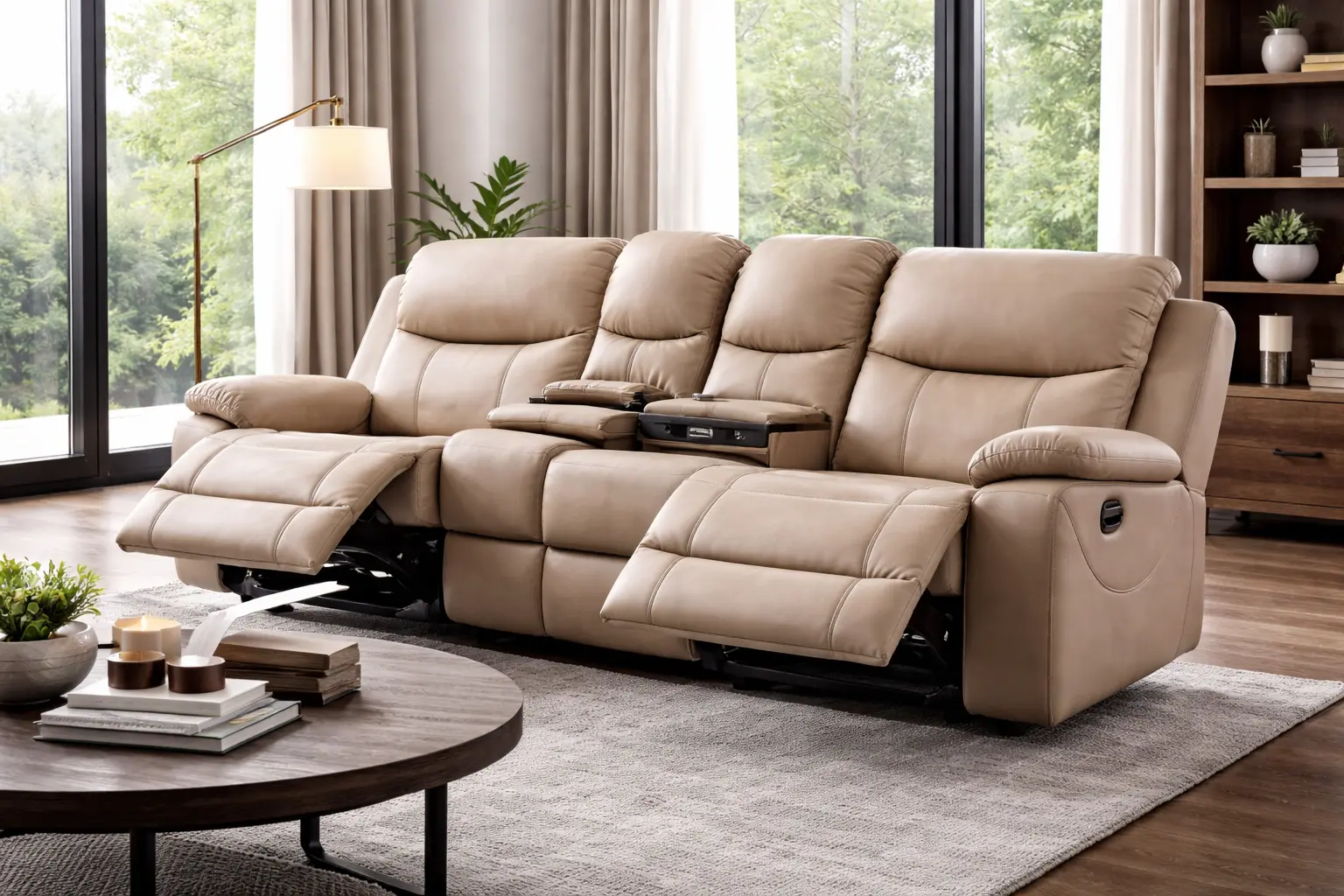
Reclining Sofa: Structural Design, Functional Logic, and Seating Performance
A reclining sofa is an upholstered seating system engineered with motion-enabled components that modify seating posture through controlled mechanical movement. This furniture category integrates comfort engineering, material science, and spatial planning into one unit. The primary purpose of a reclining sofa is to support seated and reclined body positions without transferring load stress to the user.
Technical Definition and Classification
A reclining sofa is classified as motion upholstery within furniture manufacturing standards.
Unlike fixed seating, this structure incorporates synchronized mechanisms that alter seat depth, backrest angle, and leg elevation.
Industry classification separates this product from static sofas due to its internal motion assemblies and reinforced load paths.
See More: Twin Size Bed: Comprehensive Technical, Functional, and Practical Guide
Internal Architecture and Frame Construction
The performance of a reclining sofa depends on its internal architecture rather than surface appearance.
The frame functions as the structural backbone and absorbs motion-related stress.
Frame Composition
Most models use kiln-dried hardwood combined with engineered plywood panels.
Steel brackets reinforce stress points where reclining mechanisms attach.
Corner-blocked joints improve shear resistance during repeated motion cycles.
This structural layout allows the reclining sofa to maintain alignment over long-term use.
Reclining Mechanism Systems
The reclining mechanism controls movement and posture transition.
These systems rely on precision-cut steel linkages and pivot joints.
Mechanism Types
Manual systems operate through levers or pull handles.
Power systems use low-voltage electric actuators for controlled adjustment.
Wall-hugger designs shift the seat forward to reduce rear clearance needs.
Zero-gravity systems elevate the legs above the torso to redistribute body weight.
Each mechanism type changes how the reclining sofa interacts with room space.
Cushioning and Support Layers
Cushion construction determines comfort retention and pressure distribution.
Seat Support Structure
Most designs include sinuous steel springs or pocketed coils beneath high-density foam.
Foam density affects compression recovery and shape stability.
Backrest and Lumbar Zones
Segmented foam zones support spinal curvature during recline.
Some models integrate adjustable lumbar panels for posture control.
These features allow the reclining sofa to maintain ergonomic alignment.
Upholstery Materials and Performance
Upholstery selection impacts durability and maintenance requirements.
Common Upholstery Options
| Material | Functional Property | Typical Use |
|---|---|---|
| Top-grain leather | High abrasion resistance | Long-term seating |
| Polyester blends | Tensile strength | Family rooms |
| Microfiber | Stain resistance | High-traffic areas |
| Performance fabric | Moisture control | Media spaces |
Materials used on a reclining sofa undergo flex testing to resist wear at motion points.
Functional Variants by Layout
A reclining sofa exists in multiple configurations to suit different room layouts.
Standard and Sectional Layouts
Single-unit models offer two or three reclining seats.
Sectional layouts integrate recliners within modular seating arrangements.
Corner sections remain stationary to preserve structural balance.
Each layout affects how the reclining sofa fits within interior plans.
Dimensional Standards and Space Planning
Accurate dimensions ensure proper function.
Typical Measurements
| Dimension | Range |
|---|---|
| Overall width | 80–96 inches |
| Seat height | 18–20 inches |
| Upright depth | 20–24 inches |
| Fully reclined depth | 60–70 inches |
Clearance requirements vary depending on mechanism type used in the reclining sofa.
Ergonomic Performance Characteristics
A reclining sofa supports posture adaptation through controlled seat geometry.
Recline angles reduce spinal compression and distribute body pressure evenly.
Headrests and footrests stabilize the neck and lower limbs during extended use.
These characteristics define the ergonomic value of a reclining sofa.
Usage Environments and Applications
This seating system serves multiple interior environments.
Common Placement Areas
Living rooms support extended seating durations.
Home theaters use reclined posture for viewing comfort.
Media rooms benefit from integrated consoles and storage.
Assisted living spaces use motion seating for mobility support.
Each setting influences how a reclining sofa is specified.
Maintenance and Longevity Factors
Product lifespan depends on material quality and care practices.
Routine actions include upholstery cleaning, mechanism inspection, and joint lubrication.
Electrical components in powered units require periodic cable checks.
Proper maintenance preserves motion consistency and frame integrity.
These factors extend the usable life of a reclining sofa.
Reclining Sofa vs Fixed Seating
| Feature | Motion Seating | Fixed Seating |
|---|---|---|
| Adjustability | High | None |
| Structural reinforcement | Required | Minimal |
| Clearance space | Moderate | Low |
| Ergonomic adaptability | Advanced | Limited |
This comparison clarifies functional distinctions.
Purchase Evaluation Criteria
Selection involves technical review rather than appearance alone.
Key criteria include mechanism load rating, frame materials, upholstery abrasion score, and warranty scope.
Power models also require electrical certification verification.
These factors define long-term performance of a reclining sofa.
Emerging Design Developments
Current designs integrate technology features.
Examples include USB charging ports, memory-position recline settings, and smart-home compatibility.
These additions expand the functional role of a reclining sofa beyond seating.
See More: Pappedeckel: A Complete Guide to Modern Fiberboard Lids, Uses & Production
FAQs:
What differentiates motion seating from fixed seating?
Motion seating incorporates mechanical systems that adjust posture under load.
Are power-operated models energy intensive?
Low-voltage systems consume minimal electricity during operation.
Can motion components be serviced?
Most designs allow replacement of mechanisms and motors.
Does placement affect performance?
Level flooring and proper clearance preserve alignment.
Is upholstery replacement possible?
Many designs support reupholstering without frame replacement.
Conclusion:
A reclining sofa represents a convergence of motion engineering, ergonomic science, and furniture construction.
Its value lies in adaptability, structural reinforcement, and posture support across varied living environments.
Understanding internal design and performance metrics enables accurate evaluation and informed selection.