Pravi Celer: Detailed Guide to Characteristics, Uses, Nutrition & Culinary Importance
The plant known as pravi celer holds a significant place in European cuisine and modern nutrition. This crisp, aromatic ingredient supports a wide range of dishes, provides valuable nutrients, and plays a major role in culinary traditions. Its mild flavor, light texture, and high hydration make it a useful addition to soups, salads, cooked meals, and drinks. The following guide explores its characteristics, history, nutritional benefits, how it is used, and why it remains a staple in both household and professional kitchens.
Botanical Background and Plant Structure
This vegetable belongs to the Apium graveolens species, a member of the Apiaceae family. It shares botanical ties with parsley, coriander, fennel, and carrot. The plant features a tall, ribbed stalk, soft leaves, and a subtle aroma produced by essential oils found in its fibers.
Three main forms exist:
-
Stalk variety – grown for long, crisp stems.
-
Leaf type – cultivated for aromatic leaves used in seasoning.
-
Root type – recognized for a round, dense root used in hearty dishes.
Regions such as Croatia, Serbia, Italy, and the Netherlands produce large quantities of this crop because it thrives in cooler climates with rich, moist soil. Farmers value it for its steady yield and culinary versatility.
See More: Can You Freeze Mushrooms: Complete Preservation Guide With Methods, Safety, Texture, and Storage
Nutritional Profile and Key Benefits
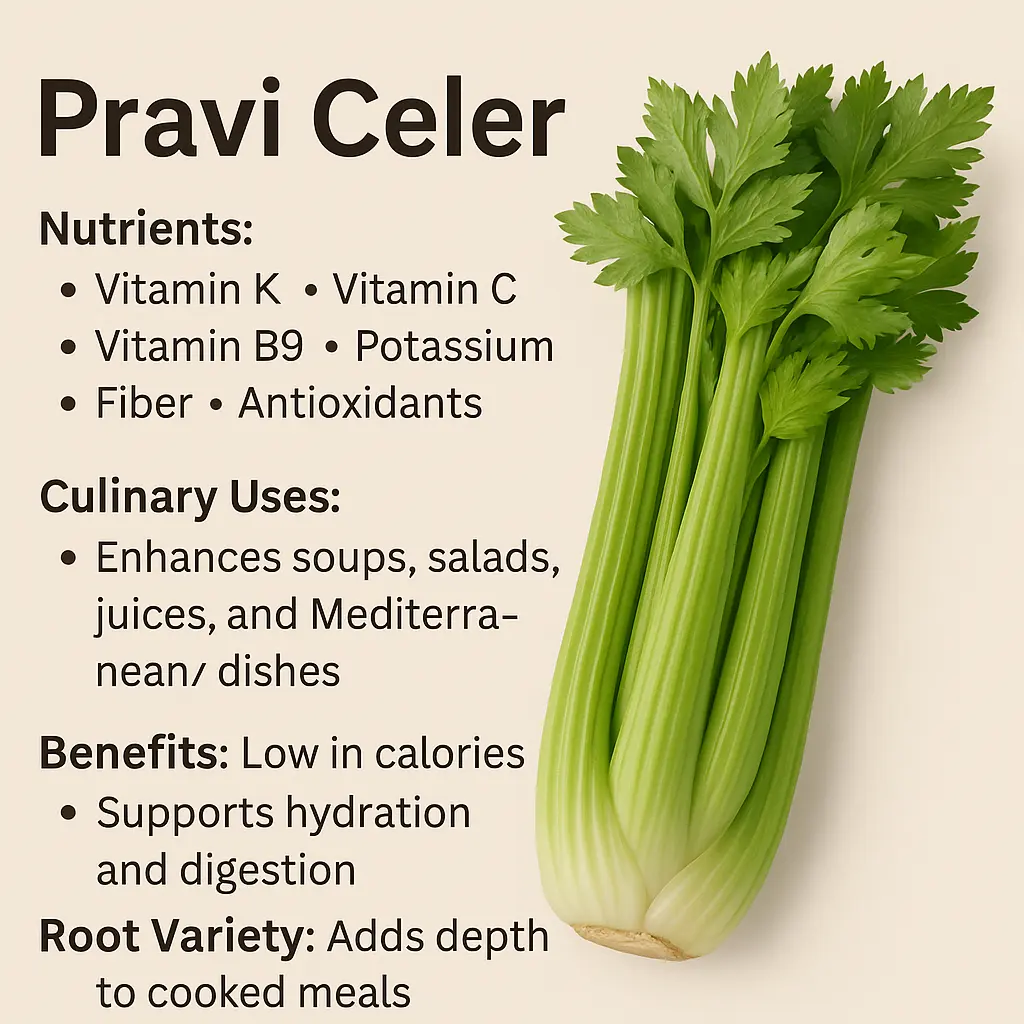
The ingredient provides hydration, vitamins, minerals, and plant compounds that support daily nutrition. Its nutrient structure makes it suitable for lightweight meals, balanced diets, and fitness-oriented eating plans.
Nutritional Table (Per 100g)
| Component | Approx. Amount | Description |
|---|---|---|
| Calories | 15–18 kcal | Very low energy density |
| Water | 90–95% | Natural hydration source |
| Fiber | 1.5–2 g | Supports digestion |
| Vitamin K | 25–30 µg | Contributes to bone metabolism |
| Potassium | 250–300 mg | Helps maintain electrolyte balance |
| Folate | 25–35 µg | Important for cellular function |
| Vitamin C | 2–4 mg | Supports immune processes |
| Plant Compounds | Polyphenols & antioxidants | Natural protection mechanisms |
Main Benefits
-
Digestive Support: Fiber helps maintain regularity.
-
Hydration: High water content assists with fluid balance.
-
Low-Calorie Structure: Useful for weight-sensitive diets.
-
Mineral Content: Potassium contributes to normal cell activity.
-
Culinary Adaptability: Works well in raw and cooked dishes.
These qualities make pravi celer a valuable ingredient for everyday meals.
Culinary Uses in Regional and International Dishes
This vegetable serves as a fundamental ingredient in various cuisines. Its aroma complements meats, grains, legumes, and other vegetables.
Traditional Uses
-
Base for vegetable soups
-
Ingredient in slow-cooked stews
-
Addition to winter salads and pickled mixes
-
Seasoning agent for homemade broths
-
Component in root-based spreads and salads
Modern Uses
-
Smoothies and vegetable juices
-
Fitness meal prep bowls
-
Light salads with lean protein
-
Low-calorie side dishes
-
Plant-forward recipes focused on fresh ingredients
Chefs appreciate the way this vegetable absorbs surrounding flavors while maintaining its texture.
How to Select and Store the Freshest Stalks
Fresh produce delivers better texture, aroma, and nutritional value. Proper selection and storage extend its shelf life.
How to Select Quality Stalks
-
Look for firm ribs with bright green color.
-
Avoid soft areas or limp leaves.
-
Prefer a clean break when bending the stalk.
-
Check for a pleasant, natural aroma.
How to Store It Properly
-
Wrap stalks in foil before refrigerating them.
-
Keep the vegetable unwashed until use.
-
Store root-type celer in a cool, dark environment.
-
Use chopped pieces within several days for best crunch.
Good storage practices reduce moisture loss and prevent fiber softening.
Understand the Ingredient Better
Major Qualities of This Vegetable
-
Crisp structure
-
Pleasant aroma
-
Neutral taste that adapts easily
-
Hydration-rich composition
-
Balanced micronutrient set
-
Low-calorie profile
-
Compatibility with numerous recipes
Advantages for Home Cooks and Chefs
-
Enhances broth flavor
-
Strengthens the base of cooked meals
-
Works well in fresh salads
-
Adds aroma to pickled mixes
-
Blends easily in smoothies
-
Supports balanced meal planning
-
Provides texture variation in dishes
These lists show why pravi celer remains essential across cuisines.
Role in Aromatic Cooking Bases
Many culinary traditions use this vegetable as part of a flavor-building trio:
-
French cuisine: onion, carrot, and celery form the classic mirepoix.
-
Italian cuisine: onion, carrot, and celery create soffritto.
-
Balkan cuisine: onion, carrot, and celery are used for winter soups, gravies, and stews.
In each tradition, the vegetable helps produce aroma, moisture, and depth.
Preparation Techniques and Cooking Tips
Different preparation styles bring out different characteristics.
For Raw Dishes
-
Slice thinly to preserve crispness.
-
Combine with apples, cabbage, or carrots.
-
Add lemon to maintain color and increase freshness.
For Cooked Meals
-
Add early when preparing soups to extract aroma.
-
Roast root-type pieces for richer, earthy flavors.
-
Combine with grains for balanced meals.
-
Use leaves as garnish or seasoning.
For Drinks
-
Blend stalks with cucumber, apple, and lemon.
-
Use cold water to preserve nutrients.
-
Filter for a lighter texture if preferred.
Cultural Significance and Everyday Use
Many cultures treat pravi celer as a practical everyday ingredient due to its availability and culinary flexibility. It forms the backbone of winter stockpots, festive meals, and traditional vegetable mixes. In modern kitchens, it supports light recipes and plant-focused cooking trends.
Its root form appears in creamy spreads, mixed salads, and holiday dishes. The leaf form acts as a natural herb, while the stalk form contributes crunch and hydration.
See More: Hair Dye for Dark Hair: The Complete Expert Guide for Bold, High-Impact Color
FAQs:
1. What is pravi celer used for most often?
It is commonly used in soups, broths, salads, cooked meals, smoothies, and aromatic recipe bases.
2. Can it be eaten raw?
Yes. The stalks offer a crisp texture and hydrate the body when consumed fresh.
3. How long does it stay fresh?
When wrapped in foil and refrigerated, it remains fresh for about one to two weeks.
4. Is it suitable for low-calorie diets?
Yes. Its very low energy value makes it compatible with calorie-conscious eating plans.
5. Do the leaves have culinary value?
The leaves carry strong aroma and can be used as seasoning or garnish.
6. What dishes benefit most from its flavor?
Soups, stews, salads, vegetable blends, and fitness bowls benefit greatly.
7. Is the root form used differently?
Yes. The root is grated into salads, cooked in stews, or blended into spreads.
Conclusion
Pravi celer stands out as a practical, flavorful, and nutritionally valuable ingredient with deep roots in regional cooking and modern dining trends. Its crisp texture, hydrating structure, and adaptable flavor make it suitable for both raw and cooked recipes. With proper selection, storage, and preparation, this vegetable enhances meals while contributing important nutrients to the diet. Its long-standing use in traditional kitchens and emerging popularity in health-focused meals confirm its position as one of the most dependable vegetables for daily cooking.